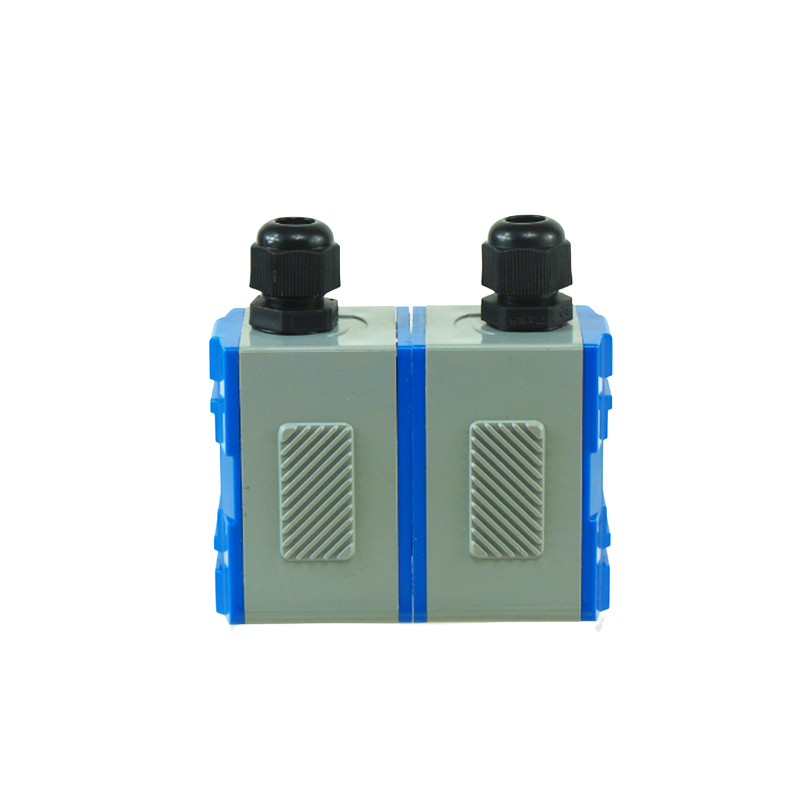

A wall-mounted ultrasonic flowmeter refers to an ultrasonic flowmeter whose signal converter (transmitter) is installed using a wall-mounted method. This installation method makes it convenient for operators to view data and perform settings, while also protecting the electronic components inside the converter from harsh environmental conditions.
Advantages
- Low installation cost: No pipeline modification is required, saving installation costs and time.
- Installation without production interruption: Installation and measurement can be performed while the pipeline is in normal operation, without affecting production.
- High flexibility: Measurement can be conveniently performed on different pipelines.
- High safety: Avoids safety risks associated with cutting pipelines.
- Strong applicability: Can be applied to various complex pipeline systems.
Limitations
- Accuracy may be affected: Measurement accuracy may be influenced by factors such as the condition of the pipeline inner wall (e.g., scaling, corrosion), the presence of bubbles or solid particles in the fluid, and flow velocity distribution.
- High installation requirements: Ensuring good coupling between the sensor and the pipeline outer wall (typically requiring a coupling agent) is necessary, along with proper sensor spacing and installation location.
- May not be suitable for certain special fluids: Doppler methods may not be applicable for liquids that are extremely clean and contain no suspended particles or bubbles.
- Special sensors may be required for high-temperature or low-temperature pipelines: Extreme temperatures may affect sensor performance and coupling effectiveness.
Applications
- Water and wastewater treatment: Measuring the flow of tap water, sewage, cooling water, circulating water, etc.
- Heating, Ventilation, and Air Conditioning (HVAC): Measuring the flow of chilled water, hot water, etc., for energy management.
- Petrochemicals: Measuring the flow of various oils and chemical liquids.
- Food and Beverages: Measuring the flow of various beverages and food-grade liquids.
- Pharmaceuticals: Measuring the flow of purified water, pharmaceutical solutions, etc.
- Energy Management: Monitoring energy consumption and conducting energy-saving assessments.
- Fault Diagnosis and Maintenance: Used for quickly identifying flow issues in pipeline systems.
- Temporary Flow Measurement and Calibration: As a tool for temporary monitoring or calibrating existing flow meters.
- Installation Process:
Installation Steps
- Selecting an appropriate installation location: Choose an appropriate installation location based on factors such as pipeline material, size, fluid characteristics, and required straight pipe section length.
- Clean the pipe outer wall: Clean oil stains, rust, etc., from the pipe outer wall to ensure good contact between the sensor and the pipe.
- Apply coupling agent: Apply an appropriate amount of coupling agent (typically silicone grease or other specialized coupling agent) to the contact surface between the sensor and the pipe to eliminate air gaps and ensure effective transmission of ultrasonic signals.
- Secure the sensor: Mount the sensor on the outer surface of the pipe at the specified intervals and orientation, and secure it with clamps or straps.
- Connect the sensor to the converter: Connect the sensor to the signal converter (host) via a cable.
- Set instrument parameters: Configure the flowmeter parameters based on pipe dimensions, fluid medium, and other relevant information.
- Begin measurement: After completing the setup, flow measurement can commence.
| Brand | Apure |
|---|---|
| Model | TUF |
| Measurement range | 0~±10m/s |
| Accuracy | flow rate is better than ±1% |
| Display | 2 x 10 Chinese backlit characters or 2 x 20 character LCD display, support |
| Flow direction | Positive and negative two-way metering, and measure positive, negative, net cumulative flow / heat |
| Data interface | RS485 serial turbulence, can be upgraded by PC computer, support MODBUS and other protocols |
| Signal output | 1 channel 4-20mA current output 1 relay output 1 channel OCT pulse output (programmable between 6~100ms pulse width, default 200ms) |
| Power supply | Ac85~264V or Dc8~36V |
| Media turbidity | ≤ 2000pm and small bubble content |
| Applicable pipe | Carbon steel, stainless steel, copper, PVC, aluminum, fiberglass and other uniform and dense pipes, allowing lining |