
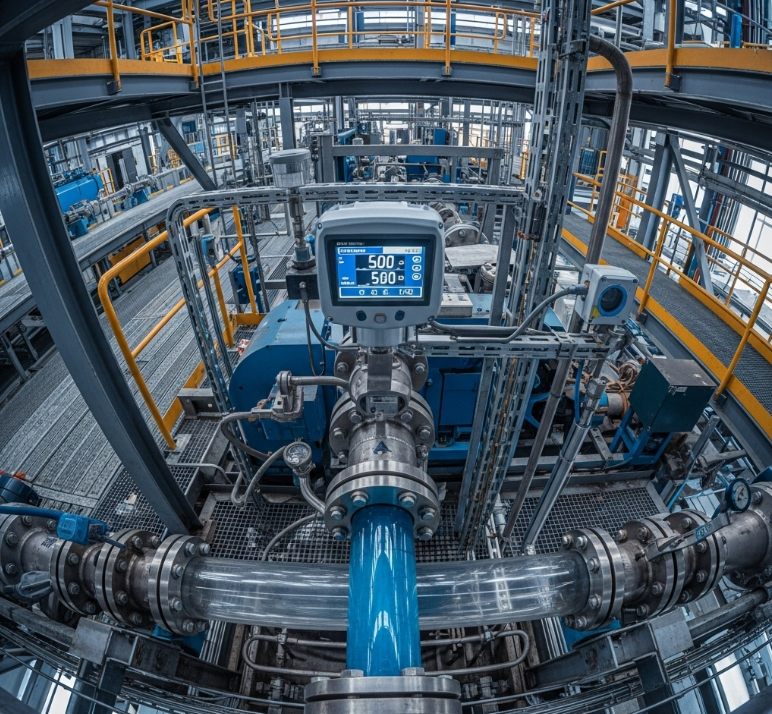
A flow meter is an instrument used to measure the velocity or flow rate of a fluid (liquid, gas, or steam). Its core purpose is to determine how much fluid passes through a pipe or equipment cross-section per unit of time.
Basic Functions of Flow Meters
- Measure instantaneous flow: current fluid velocity or flow rate
- Record cumulative flow: total volume or mass that has flowed through
- Serve as input for control systems: assist in automated operations such as batching, filling, and energy-saving control
- Monitor equipment operating status: determine whether there are leaks, blockages, or abnormal operations

Two main units of measurement for flow meters
| Type | Unit Example | Description |
|---|---|---|
| Volume flow rate | m³/h,L/min | Volume flowing per hour/minute |
| Mass flow rate | kg/h,t/h | Actual mass flowing per hour/minute |
Common Types of Flow Meters (Classified by Principle)
| Type | Suitable Applications | Principle Summary |
|---|---|---|
| Electromagnetic Flow Meter | Conductive liquids (e.g., water, wastewater, acids, alkalis) | Measures the induced voltage generated by the fluid using Faraday’s law of electromagnetic induction |
| Vortex Flow Meter | Gases, steam, liquids | Calculates flow rate based on the frequency of vortices generated by the fluid |
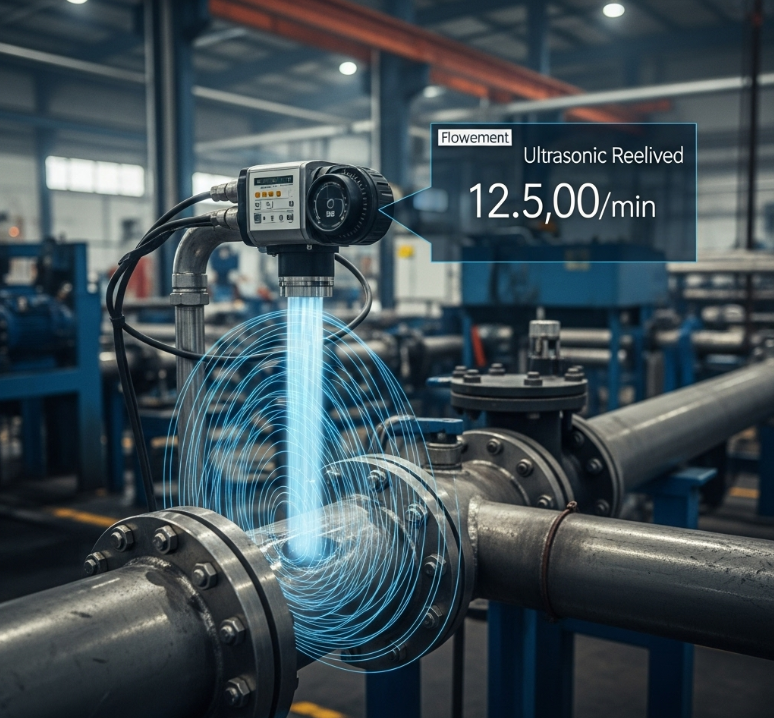
| Ultrasonic Flow Meter | Large-diameter pipes, oils, non-conductive liquids | Measures flow velocity using the time difference of ultrasonic waves traveling through the fluid |
| Coriolis Mass Flow Meter | High-precision mass measurement (e.g., oil, chemicals) | Measures mass flow directly using Coriolis force |
| Positive Displacement Flow Meter | Viscous liquids, oils, low-flow applications | Mechanically counts the volume of fluid passing through in discrete amounts |
| Thermal Mass Flow Meter | Low-flow gases, clean air | Calculates mass flow by measuring the heat loss from a heated sensor as gas passes over it |
There are many types of flow meters, including turbine flow meters, variable area flow meters, and others.
Factors to Consider When Selecting a Flow Meter
Selecting the appropriate flow meter requires consideration of multiple factors, including:
- Type of measured substance: Is it a liquid, gas, or steam? Its density, viscosity, corrosiveness, conductivity, and other characteristics.
- Measurement location: Pipe size, installation space, whether online measurement is required, etc.
- Measurement range: The minimum and maximum flow rates that the flow meter can accurately measure.
- Accuracy and repeatability: The accuracy and consistency of measurement results.
- Pressure drop: The pressure loss caused by the flow meter during measurement.
- Environmental conditions: Temperature, pressure, vibration, etc.
- Cost: Equipment cost, installation cost, maintenance cost, etc.
- Familiarity and maintenance experience of factory personnel.
Applications
Industrial Production and Process Control
- Chemical Industry: Precisely control the mixing ratios of various chemical raw materials and the feed rate of reactors to ensure product quality and production safety.
- Petroleum and Natural Gas Industry: Monitor the flow of crude oil and natural gas during extraction, transportation, and refining processes, conduct trade settlement (transfer measurement), and detect pipeline leaks.
- Power Industry: Measuring cooling water and steam flow rates in coal-fired power plants, coolant flow rates in nuclear power plants, and fuel consumption (natural gas, heavy oil) to optimize power generation efficiency.
- Food and Beverage Industry: Controlling ingredient addition rates, filling line speeds, and capacities to ensure product formula consistency and production efficiency.
- Pharmaceutical Industry: Monitoring liquid and gas flow rates during drug production to ensure drug purity and compliance with production standards.
- Paper and pulp industry: Measure the flow of water, pulp, chemicals, etc., and control material balance during the production process.
- Metallurgical industry: Monitor the flow of cooling water, fuel gas, and protective gases.
- HVAC (heating, ventilation, and air conditioning) systems: Monitor the flow of air, hot and cold water, and steam to optimize building energy consumption and indoor comfort.
Energy management and energy conservation
- Gas Metering: Metering and billing for natural gas and liquefied petroleum gas consumption by residential and industrial users.
- Heating Systems: Measuring the flow of hot water or steam in heating pipes to enable billing based on heat consumption and optimize heat distribution.
- Compressed Air Systems: Monitoring compressed air usage to identify leaks and optimize system efficiency.
Environmental Protection and Water Resource Management
- Water and wastewater treatment: Monitor the inflow, outflow, and flow rates at each stage of the treatment process in water treatment plants; monitor wastewater discharge volumes at wastewater treatment plants to ensure compliance with emission standards.
- Irrigation systems: Precisely measure water usage in agricultural irrigation to achieve water-saving irrigation and improve water resource utilization efficiency.
- Pollution emission monitoring: Monitor industrial exhaust gas and wastewater discharge volumes for environmental regulation purposes.
Commercial and Trade Settlement (Custody Transfer)
- Gas Stations: Measure the amount of gasoline and diesel sold to vehicles.
- Natural Gas Transmission Pipelines: Inter-pipeline metering for large natural gas transmission pipelines for trade settlement.
- Liquid Bulk Cargo Loading and Unloading: Precise measurement during the loading and unloading of liquids such as oil and chemicals at ports and terminals.
Medical and Life Sciences
- Ventilators: Precisely control the flow rate of oxygen and air mixtures delivered to patients.
- Infusion pumps: Precisely control the infusion rate and dosage of medications.
- Laboratory equipment: Control the flow rate of gas or liquid reagents for various analyses and experiments.
Research and Laboratory
- Fluid mechanics research: Used to study the flow characteristics of fluids.
- New material development: Control the flow rate of fluid components during the synthesis and testing of various materials.
Turn flow data into assets
Installing a flow meter is just the first step; the real value lies in converting “measurement” into “decision-making”:
Use flow data for energy analysis
- Daily/weekly/monthly usage trend analysis
- Energy consumption per unit of output (energy consumption per unit)
- Is there any “idle” flow during nighttime/non-production hours?
Integration with automation systems
- Automatic triggering of pressure reduction or valve closure upon exceeding flow limits
- Integration with formulation systems to automatically adjust ratios
- Integration with ERP systems to dynamically generate consumable plans
Unified management of data from multiple devices
- Deployment of flow gateways or industrial IoT data collectors
- Creation of visual dashboards (Power BI, Grafana, etc.)
- Enabling data analysis and comparison across multiple facilities and workshops
How to Choose the Right Flow Meter
A good choice starts with the problem, not the model.
- What type of liquid is it? Is it conductive? Is it clean? Is it viscous? Is it a gas or a liquid?
- What is the flow range that needs to be measured?
- What are the pipe size and material?
- What level of accuracy is required?
- Does the instrument need to integrate with existing control or data systems?
- What are the environmental conditions? (Temperature, pressure, vibration)
- What is the total cost of ownership (not just the purchase price)?
Always match the instrument to the application, not just the budget.
Common Mistakes and Best Practices
Mistake 1: Using One Type of Instrument for All Liquids
Different fluids have unique properties. For example, ultrasonic instruments may struggle with aerated liquids, and Coriolis instruments may be overused for basic water lines.
Mistake 2: Ignoring Maintenance Requirements
Mechanical instruments wear out over time. Electromagnetic sensors may become damaged. Develop a maintenance plan based on fluid cleanliness and usage intensity.
Mistake 3: Ignoring data integration
Many instruments today offer digital outputs (Modbus, HART, 4-20mA). Not using them limits their value. Always check compatibility with SCADA or cloud systems.
Best Practice: Start with a Process Audit
Before purchasing, consider using a clamp-on ultrasonic meter for temporary flow studies. It reveals true usage patterns and helps you properly scale your investment.
The Future of Flow Measurement
With the rise of IIoT (Industrial Internet of Things), flow meters are evolving into smart sensors with:
- Built-in diagnostics and predictive maintenance
- Wireless communication (LoRa, NB-IoT, Wi-Fi)
- Cloud-based real-time analysis and alerts
- Integrated AI-driven process optimization
As manufacturing transitions toward digital twins and autonomous operations, flow meters are key enablers of visibility, responsiveness, and control.