
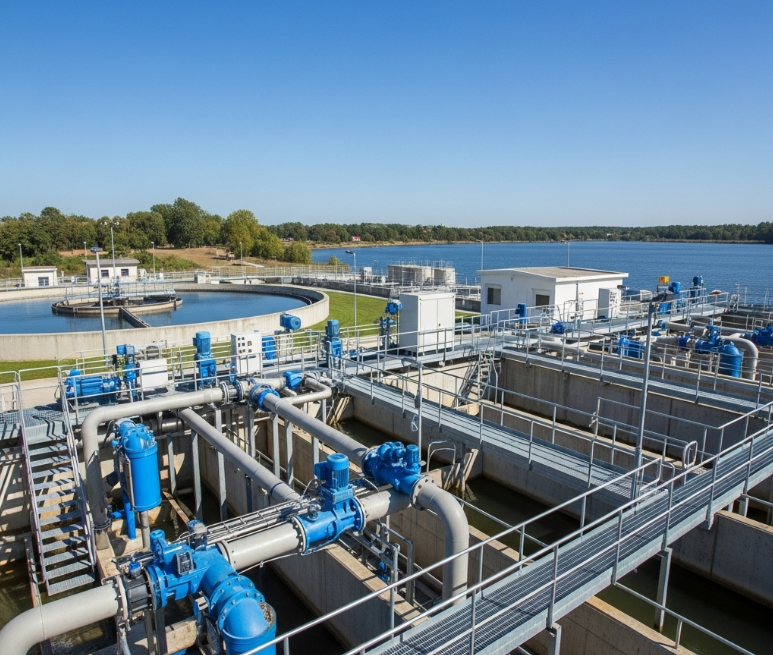
Water is the lifeblood of the Earth, and responsible management of water through effective wastewater treatment is critical to public health and environmental sustainability. At the heart of effective water and wastewater treatment is the critical task of flow measurement. Accurately knowing how much water is being treated, distributed, and discharged is essential for everything from resource allocation to regulatory compliance.


Why measure water and wastewater flow?
In water and wastewater systems, precise flow measurement is not just about knowing the numbers; it is about laying the foundation for efficient and sustainable operations. Here’s why it matters so much:
- Water resource management: In an era of increasing water scarcity, precise measurement enables effective monitoring of water resources, allocation losses, and overall consumption, leading to better resource planning and conservation efforts.
- Billing and Revenue: For water utilities, accurate flow meters are essential for fair and transparent billing for residential, commercial, and industrial customers.
- Process Control and Optimization: In water and wastewater treatment plants, flow meters play a critical role in controlling and optimizing various treatment processes, ensuring the effective use of chemicals and energy.
- Leak Detection and Prevention: Monitoring flow patterns can help identify leaks in distribution networks, allowing for timely repairs and minimizing water loss.
- Environmental Compliance: Regulatory agencies typically require accurate measurement of treated wastewater discharges to ensure compliance with environmental standards and prevent pollution.
- Operational Efficiency: Real-time flow data enables operators to make informed decisions, troubleshoot issues, and optimize system performance.
Common Types of Flow Meters in Water and Wastewater
The water and wastewater treatment industry utilizes a variety of flow meter technologies, each suited for specific applications and fluid characteristics. The following are some of the most common types:
- Magnetic Flow Meters (Mag Meters): These are the workhorses of the industry, particularly for conductive liquids such as water and wastewater (including slurry). They operate based on Faraday’s law of electromagnetic induction, offering high accuracy, minimal pressure drop, and no moving parts, making them ideal for handling dirty or abrasive fluids.
- Ultrasonic Flow Meters: Utilizing sound waves, ultrasonic flow meters come in various types (transit time and Doppler) and can measure the flow of clean and solid-containing liquids. Clamp-on versions offer the advantage of non-invasive installation, making them ideal for retrofits and temporary measurements.
- Mechanical flow meters: This category includes traditional technologies such as positive displacement meters (accurate for clean water billing) and turbine meters (suitable for relatively clean water with consistent flow). While reliable, their moving parts may wear out.
- Vortex flow meters: These instruments measure the frequency of vortices generated by a blunt body in the flow. They are suitable for various liquids, including some wastewater applications, and offer good accuracy and a wide turndown ratio.
- Open-channel flow meters: Specifically designed to measure flow in open channels such as rivers, canals, and weirs (common in wastewater treatment plant effluent), these flow meters typically combine technologies like ultrasonic level sensors with established hydraulic equations (such as the Manning equation) to calculate flow.
Selecting the Right Flow Meter
Selecting the optimal flow meter for water or wastewater applications requires careful evaluation of several factors:
- Fluid characteristics: Is the water clean, or does it contain solids, sludge, or chemicals? Conductivity is a critical factor for electromagnetic flow meters.
- Pipe size and material: Compatibility between the flow meter and the pipe diameter and material is crucial for precise installation and performance.
- Accuracy requirements: The required accuracy level will depend on the application (e.g., billing applications require high precision).
- Installation constraints: Consider whether new installation or retrofitting is required. Clamp-on ultrasonic flow meters are ideal for retrofitting without disrupting flow.
- Cost: Evaluate initial purchase price, installation costs, and long-term maintenance expenses.
- Regulatory requirements: Ensure the selected flow meter complies with any relevant industry standards or regulatory requirements.
Common applications for different types of flow meters
- Water treatment plants: Magnetic flow meters are typically used for raw water intake, chemical dosing, and treated water discharge. Ultrasonic flow meters can be used for various water purification applications and leak detection.
- Wastewater treatment plants: Magnetic flow meters are excellent for measuring inflow and outflow, as well as sludge flow. Open channel flow meters are essential for measuring the flow entering receiving water bodies. Doppler ultrasonic flow meters are suitable for measuring the flow of liquids containing suspended solids.
- Power distribution networks: Ultrasonic flow meters, particularly clamp-on and insertion-type flow meters, are increasingly used for leak detection and flow monitoring in large pipelines. Mechanical instruments remain widely used for residential and commercial billing.
Installation and maintenance: Ensuring long-term performance
Proper installation and regular maintenance are critical for maximizing the accuracy and service life of water and wastewater flow meters. This includes following the manufacturer’s guidelines, ensuring proper pipeline alignment, and implementing a regular inspection and calibration schedule.
The future of flow measurement: Embracing innovation
The field of water and wastewater flow measurement is constantly evolving. As flow meters are increasingly integrated into IoT networks for real-time data collection, remote monitoring, and advanced analytics, we are seeing a trend toward “smart water” initiatives. This data-driven approach enables more efficient water management, predictive maintenance, and better overall system control.