
The metal and mining industries form the backbone of global infrastructure, providing essential raw materials for countless products and technologies. From initial extraction to complex processing steps such as crushing, grinding, flotation, leaching, and smelting, these operations involve the movement and transformation of large quantities of materials, often under challenging conditions.
At the core of efficient and safe operations is precise measurement, particularly reliable flow measurement. While they may not be as eye-catching as large excavators or grinding mills, flow meters play a critical role in optimizing processes, managing resources, ensuring safety, and complying with environmental regulations.

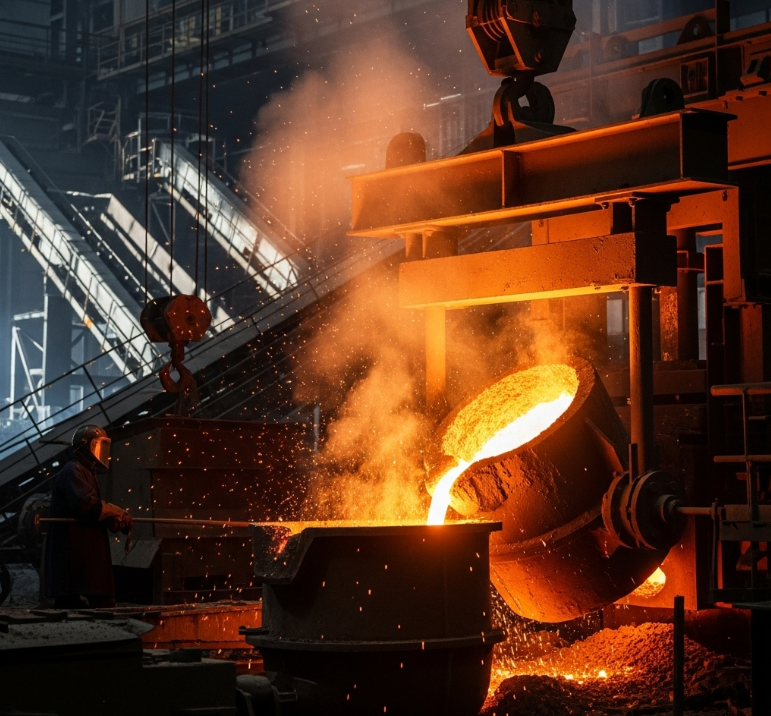
Why is flow measurement important in the mining and metallurgy industry?
Accurate flow data is critical throughout the value chain:
- Process control: Precise control of water, chemicals (flotation, leaching reagents), and slurry is key to achieving target recovery rates and product quality. Incorrect dosing can lead to resource waste or poor separation.
- Material balance: Tracking the flow of ore, concentrate, tailings, and water helps understand process efficiency and perform accurate material balance.
- Water Management: Water is a precious resource in mining. Measuring water intake, usage in various processes, and discharge is necessary for protection and compliance.
- Tailings Management: The safe transportation and storage of tailings (waste material) requires precise flow measurement of dense abrasive slurry to prevent blockages and ensure the structural integrity of reservoirs.
- Energy Efficiency: Monitoring the flow of compressed air, steam, or fuel can help identify areas for energy savings.
Unique Challenges
Unlike many other industries, metal and mining operations present some of the harshest environments for instrumentation. Flow meters here face relentless punishment:
- Abrasion: Slurry containing hard, sharp rock particles and sand can quickly wear down the internal components of traditional flow meters.
- Corrosion: Processing chemicals used in leaching or flotation circuits can be highly corrosive, attacking standard materials.
- High pressure and temperature: Some refining processes involve extreme pressures and temperatures, requiring robust and specially designed instruments.
- Viscous and dense slurries: Handling thick, heavy slurries requires instruments that can accommodate high solid content and viscosity without clogging or significant pressure drop.
- Vibration and shock: Heavy machinery such as crushers and mills generate significant vibration, which can affect instrument performance and lifespan.
- Harsh environments: Dust, humidity, extreme temperatures (hot or cold), and remote locations add operational challenges.
- Large pipe sizes: Many pipes in mining operations are very large, requiring specialized or insertable flow meters.
How to choose the right flow meter?
Given these challenges, selecting the appropriate flow meter technology is critical. Not all meters are created equal when it comes to withstanding the harsh conditions of a mine. Some common types well-suited for specific mining applications include:
- Electromagnetic flowmeters (magnetic meters): Typically the go-to for conductive slurries and liquids. With no moving parts and various wear-resistant/corrosion-resistant lining options (such as polyurethane, PTFE, or ceramic), they are ideal for applications like flotation, leaching, tailings, and water flow. They offer high accuracy and low pressure drop.
- Ultrasonic flow meters: Can be non-invasive (clamp-on) or insertable, making them suitable for large pipes or existing installations. Transmissive time-of-flight ultrasonic meters are suitable for clean or moderately clean liquids, while Doppler ultrasonic meters can handle liquids containing significant suspended solids or bubbles, making them suitable for some slurry applications, though they are typically less effective than magnetic meters for dense slurries.
- Coriolis mass flow meters: Provide high-precision direct mass flow measurement unaffected by changes in density or viscosity. They can handle thick slurries and corrosive fluids with appropriate materials. However, they are typically more expensive, sensitive to vibration (requiring robust installation), and may experience significant pressure drop in very viscous or high-solids-content slurries. They may be more commonly used in precise chemical dosing or high-value concentrate production lines.
- Differential pressure flow meters (e.g., orifice plates): While widely used in other industries, traditional DP flow meters with internal restrictions (e.g., orifice plates) are typically unsuitable for abrasive slurries due to rapid wear and blockage. However, they can be used for cleaner utility flows (water, air).
Key Considerations for Selection
When selecting metal and mining flow meters, always consider:
- Fluid characteristics: Is it abrasive? Corrosive? Viscous? Conductive? What is the solid content? What is the particle size?
- Flow range and accuracy: What are the minimum, normal, and maximum flow rates? What level of accuracy does the application require?
- Operating conditions: Pressure, temperature, vibration, environmental factors (dust, humidity, extreme temperatures).
- Pipe size and material: These influence installation methods and meter type.
- Installation requirements: Straight pipe available, easy access, power supply.
- Maintenance and lifecycle costs: How easy is maintenance? What is the expected lifespan under given conditions? Consider total cost of ownership, not just the initial purchase price.
- Benefits: Optimized operations
Investing in the right flow measurement technology directly translates into tangible benefits:
- Improved process efficiency: Better control leads to higher recovery rates and less waste.
- Reduced operational costs: Optimized chemical usage, lower energy consumption, reduced maintenance downtime, and cost savings.
- Enhanced safety: Reliable monitoring helps prevent pipeline blockages and effectively manage hazardous materials.
- Environmental compliance: Accurate tracking of water usage and tailings flow supports responsible environmental management.
- Improved reliability and uptime: Instruments designed for harsh conditions are less likely to fail prematurely.