
Technologies
Process Principle of Flow Meter
The earliest flow meter technologies included variable area flow meters, turbine flow meters, positive displacement flow meters, and differential pressure flow meters. Nowadays, new flow meter technologies have fewer mechanical components and more electronic components. Electronic enhancement functions have been added, including protocols for digital control.
Electromagnetic induction
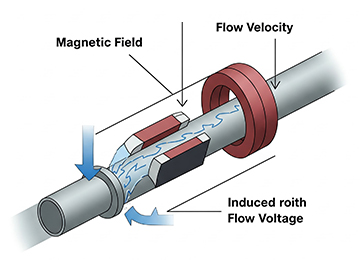
Ultrasonic

Vortex Street

Turbine
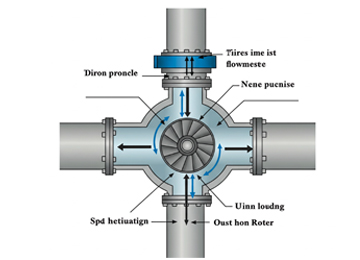
variable area

The Integration of Electronic Enhancement and Digital Control
- Sensor Integration: Traditional mechanical components (such as turbine rotation, float height, and pressure differential changes) are no longer read solely through physical scales, but are instead converted into electrical signals via high-precision electronic sensors (such as Hall effect sensors, photoelectric sensors, piezoresistive sensors, etc.).
- Signal Processing and Digitization: These weak analog electrical signals are amplified, filtered, and converted into digital signals via analog-to-digital conversion (ADC).
- Microprocessors and Algorithms: Flow meters are equipped with integrated microprocessors or microcontrollers. These devices can execute complex algorithms to linearize the raw signals, perform temperature/pressure compensation, and apply nonlinear corrections, thereby significantly enhancing measurement accuracy and stability.
- Digital Communication Protocols: This is one of the most significant advancements in modern flow meters. Protocols such as HART, Modbus, and Profibus enable seamless collaboration with other control components. Especially in manufacturing processes, these highly digitized flow meters work in tandem with actuators like valves to achieve precise measurement and control of fluids.