
The world relies on a continuous and reliable supply of electricity and energy. From the electricity that lights our homes to the fuel that powers our vehicles, the energy sector is the cornerstone of modern society. Ensuring the efficient and safe production and distribution of this energy is of critical importance.
While you may not immediately associate flow meters with power plants or oil rigs, these devices play an absolutely critical role in monitoring, controlling, and optimizing the flow of various substances required for energy production and distribution.

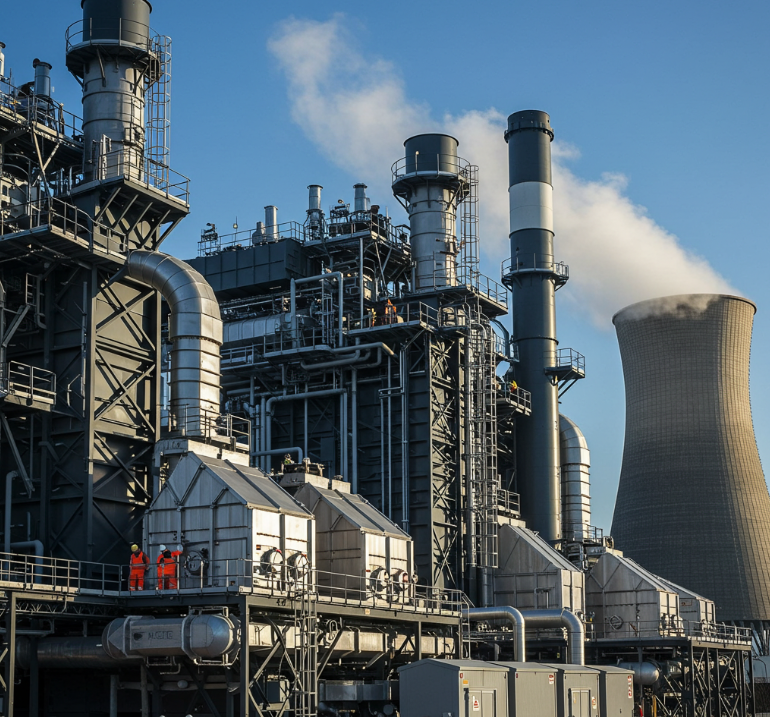
Why measure the flow of power and energy?
In the power and energy sector, precise flow measurement is about more than just knowing how much is moving. It directly impacts:
- Efficiency optimization: In power plants, precise measurement of steam, feedwater, and fuel flow enables fine-tuning of the combustion process to maximize energy conversion efficiency. Even small improvements can translate into significant cost savings and reduced emissions.
- Fuel consumption monitoring: Accurate measurement of natural gas, oil, and other fuels is critical for tracking consumption, managing inventory, and ensuring accurate billing.
- Process control: From regulating coolant flow in nuclear reactors to controlling the injection of chemicals in oil and gas pipelines, flow meters provide the necessary data to maintain stable and safe operating conditions.
- Safety: Monitoring the flow of critical fluids, especially in high-pressure or hazardous environments, is crucial for preventing accidents and ensuring the safety of personnel and equipment.
- Regulatory compliance: The energy sector is heavily regulated, and accurate flow measurement is often a requirement for environmental reporting and compliance with industry standards.
- Cost management: Precise flow data enables better resource allocation, helps identify inefficiencies and leaks, and ultimately contributes to significant cost reductions.
Flow meter technology in the energy sector
The power and energy industry utilizes various flow meter technologies, each suited for specific fluids, operating conditions, and accuracy requirements. Here are some notable examples:
For steam measurement
- Vortex flow meters: Used to measure the flow of saturated and superheated steam in power plants and industrial processes, they are reliable and cost-effective.
- Ultrasonic flow meters: Offer high accuracy and can handle high-temperature and high-pressure steam applications.
- Differential pressure (DP) flow meters: Traditional technology still used for steam flow measurement, particularly with orifice plates or Annubar sensors.
For water and coolant measurement
- Magnetic flow meters: Ideal for conductive liquids such as feedwater, cooling water, and process water in power plants. They offer high accuracy and minimal pressure drop.
- Ultrasonic flow meters: Versatile for measuring clean water, suitable for clamp-on configurations, making installation and retrofitting easy.
- Differential pressure (DP) flow meters: Used for various water flow measurements.
Fuel (natural gas, oil, and other hydrocarbons)
- Coriolis flow meters: Provide high-precision direct mass flow measurement, ideal for custody transfer of natural gas and petroleum and critical fuel consumption monitoring.
- Ultrasonic flow meters: Increasingly used in large-diameter natural gas and crude oil pipelines due to their high accuracy and reliability.
- Turbine flow meters: A reliable and widely used technology for measuring the volumetric flow of liquids and gases, including natural gas and refined petroleum products.
- Positive displacement (PD) flow meters: Offer high accuracy for viscous liquids such as heavy oil, typically used in storage and transfer applications.
- Thermal mass flow meters: Suitable for measuring the mass flow of gases, including natural gas and combustion air.
Applications in the energy sector
Flow meters are indispensable in various processes in the power and energy sectors:
- Power plants (fossil fuels, nuclear, geothermal): Measuring steam flow to turbines, boiler feedwater, fuel input (coal, natural gas, oil), cooling water for condensers, and geothermal fluids.
- Renewable energy (hydroelectric, solar thermal): Monitoring water flow in hydroelectric turbine systems and the flow of heat transfer fluids in solar thermal power generation systems.
- Oil and gas exploration and production: Measuring the flow of crude oil, natural gas, and produced water at wellheads, pipelines, and processing facilities.
- Refineries and petrochemical plants: Monitoring the flow of various hydrocarbons and chemical intermediates throughout the refining and production process.
- Transmission and distribution