
In modern industry, flow measurement is one of the most fundamental and critical parameters in process control. From water treatment to chemical production, from energy metering to environmental monitoring, the accuracy of flow measurement directly affects material balance, equipment energy consumption, and product quality.
Understanding the differences in principles between flow measurement and other processes is crucial not only for measurement accuracy but also for determining the energy efficiency and operating costs of the entire system.
Definition of Flow Meter
What is A Mass Flow Meter?
Volumetric flow rate refers to the volume of fluid flowing through a specific cross-section per unit time, typically measured in m³/h or L/min.
Volume flow rate fluctuates with changes in temperature, pressure, and density. For example, when a gas is heated, its volume increases, but the actual amount of matter remains unchanged.
What is A Volumetric Flow Meter?
Refers to the mass of fluid passing through a cross-section per unit time, measured in kg/h or t/h.
It represents the “true transfer quantity” of material, unaffected by temperature and pressure variations, and more directly reflects the material balance in the production process.
Criteria for Selecting Mass and Volume Flow Meters
Criteria for Selecting a Mass Flow Meter
1.Applications requiring extremely high measurement accuracy
- Chemical reaction feed metering (requiring precise material ratio control).
- Fuel delivery systems (oil, ethanol, liquefied petroleum gas).
- Material balance calculations in the pharmaceutical industry.
2. Operating conditions with significant variations in fluid density, temperature, or pressure
- High-temperature, high-pressure process fluids (such as thermal oil).
- Compressed gases, steam, and gas mixtures.
3. Requires direct acquisition of mass, density, or temperature signals
- Systems for real-time calculation of material balance or energy consumption.
- Energy management platforms, steam heat exchange systems.
4. High-value-added media or precision manufacturing
- Chemical agents, flavorings, fuel oil, liquefied petroleum gas.
- Measurement scenarios requiring high precision, reliability, and traceability.
Criteria for Selecting a Volumetric Flow Meter
1.Stable liquid medium density
- Tap water, wastewater, cooling water
- Industrial circulating water, municipal pipeline networks
2. Minimal variations in operating temperature and pressure
- Ambient temperature and pressure environments
- Pipeline networks or continuous flow monitoring systems
3. Measurement purpose is process monitoring, not trade measurement
- Focus on flow trends, alarms, and process monitoring
- Low absolute accuracy requirements (±1% tolerance sufficient)
4. Cost-Sensitive or Budget-Constrained Projects
- Large-diameter flow measurement points (DN100–DN600)
- Municipal or environmental engineering projects
| Type | Working Principle | Typical Apure Model |
|---|---|---|
| Mass Flow Meter | Measures mass flow directly based on the Coriolis force principle or thermal conduction principle. | Apure AMC Series Coriolis Mass Flow Meter, AMF-THERM Thermal Mass Flow Meter |
| Volumetric Flow Meter | Calculates volumetric flow by measuring flow velocity or conductive signal. | Apure magnetic flow meter, vortex flow meter |
Comparison Table of Mass Flow Meters and Volume Flow Meters


How to Convert Mass Flow to Volume Flow?
The relationship between mass flow rate and volumetric flow rate depends on the fluid density.

For gases, temperature and pressure compensation must be considered; for liquids, direct calculation is possible.
Technical Advantages of the Apure Flow Meter
As a professional manufacturer of fluid measurement and control instruments, Apure’s flow meters deliver outstanding performance in accuracy, stability, and durability:
- High-precision measurement: AMC series mass flow meters achieve accuracy up to ±0.1%, while AMF900 electromagnetic flow meters operate within ±0.3%.
- Strong anti-interference capability: Utilizes digital signal processing technology to resist bubbles, impurities, and external electromagnetic interference.
- Multi-signal Output: Supports communication protocols including 4–20mA, Modbus RTU, HART, and RS485 for seamless integration with PLC and DCS systems.
- Multi-Medium Compatibility: Measures conductive liquids, non-conductive gases, viscous oils, and slurry media.
- Simplified Maintenance: Modular core component design enables quick installation and reduced maintenance cycles.
Selection and Installation Recommendations
Selection:
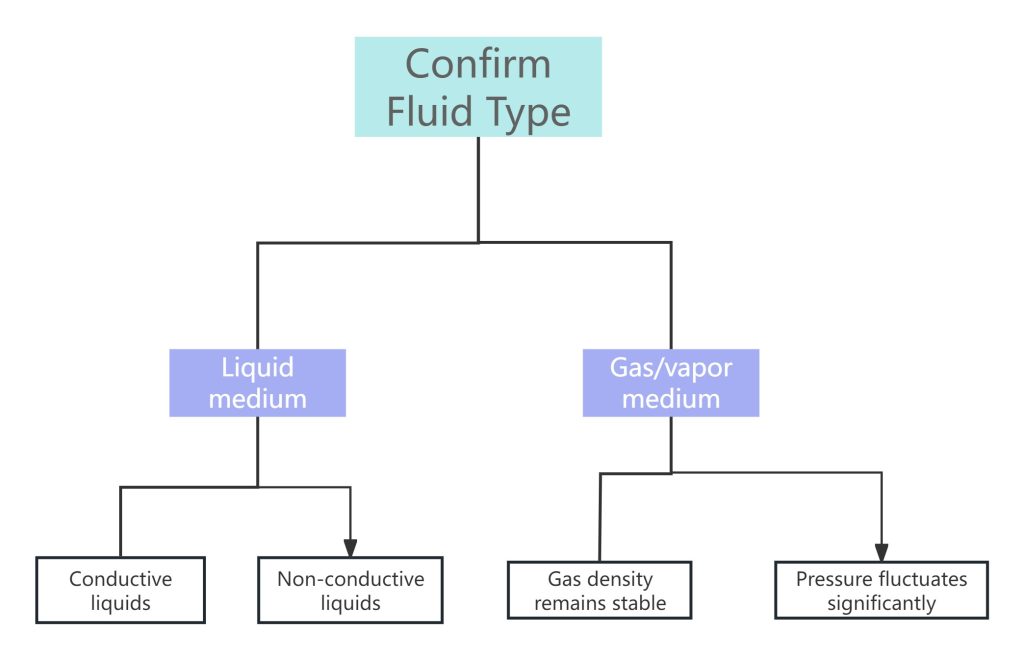
- Confirm medium type (liquid / gas / steam / slurry);
- Analyze operating parameters (temperature, pressure, flow rate range);
- Determine measurement purpose (mass or volumetric flow);
- Consider pipe diameter and installation location;
- Select signal output and communication method (analog / digital);
- Reserve maintenance space and grounding conditions.
Installation:
- Magnetic flow meters should be installed in a fully filled pipe section, away from valves and pump outlets;
- Vortex and mass flowmeters require a straight pipe run of 10 times the pipe diameter upstream and 5 times downstream;
- Thermal flowmeters should avoid installation in locations with strong pulsations or reverse gas flow.
Conclusion
Mass flow meters measure the actual mass flow rate of a substance, while volumetric flow meters measure volumetric flow velocity. Under stable temperature and pressure conditions, volumetric meters are more economical and practical; however, when operating conditions vary significantly or precise measurement of material dosing is required, mass flow meters offer greater advantages.
Apure Flow Meter is a specialized enterprise dedicated to the R&D and manufacturing of industrial automation measurement and control instruments. With years of industry experience and an international standard manufacturing system, our professional engineering team stands ready to provide technical support for your needs—whether you’re dealing with clean water, corrosive chemical liquids, or high-pressure gases and steam.