
Flow and pressure is a fundamental topic in fluid dynamics and industrial automation. Whether in water treatment, chemical dosing, food & beverage, or pneumatic systems, understanding the relationship between flow and pressure is critical to ensuring process efficiency, equipment safety, and energy savings.
What Is Flow and Pressure?
- Flow refers to the volume or mass of fluid passing through a section per unit time, typically measured in L/min, m³/h, or kg/h.
- Pressure is the force exerted by the fluid per unit area, measured in units like bar, MPa, or psi.
In general:
- Pressure is the driving force,
- Flow is the result.
Relationship Between Flow and Pressure
While pressure and flow are related, their relationship is not linear and depends on factors like:
- Pipe length and diameter
- Valves, elbows, filters
- Fluid viscosity and density
- The characteristics of the pump or compressor

Bernoulli’s Equation (simplified):
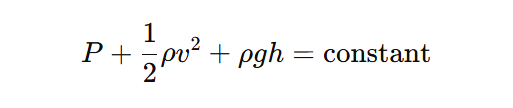
This equation illustrates that as flow velocity increases, pressure decreases, and vice versa.
Flow vs Pressure in Liquids and Gases
| Aspect | Liquids (Incompressible) | Gases (Compressible) |
| Pressure impact on flow | More linear and direct | Non-linear, depends on compression |
| Control complexity | Simpler | Complex due to temperature and density changes |
| Common instruments | Electromagnetic, ultrasonic, turbine flow meters | Thermal mass, differential pressure, Coriolis flow meters |


For example:
- In water systems, increasing pump pressure usually increases flow (if system resistance stays constant).
- In compressed air systems, flow reaches a saturation point (choked flow) even if pressure increases.
How Do Pressure Sensors and Flow Meters Work Together?
Coordinated Monitoring and Control
- Flow meters measure actual flow rate (volume or mass).
- Pressure sensors monitor system pressure for anomalies like blockage, backpressure, or leakage.
Together, they provide real-time diagnostic data for smart decision-making and process optimization.
Application Scenarios
| Industry Use | Pressure Sensor Role | Flow Meter Role |
|---|---|---|
| Reverse Osmosis | Monitor membrane pressure drop | Control recovery rate |
| Chemical Dosing | Detect pipe blockage or backpressure | Ensure precise dosing |
| Compressed Air | Detect supply fluctuations | Monitor air consumption & efficiency |
These instruments can be integrated into PLC/PID control systems for automatic feedback control.
How Can You Tell If Your System Is “Pressure-Limited” Or “Flow-Limited”?
With the flowmeter + pressure transducer linkage, the following determination methods can assist in confirmation:
Record A Graph Of Pressure Versus Flow Rate Trend
- If the pressure continues to fall but the flow rate rises slowly, it is possible that the pressure is limited.
- If the flow rate is saturating, but the pressure is still rich, the flow rate may be restricted.
Gradually Increase Valve Opening
- If the flow rate stops growing, but the increased opening still causes the pressure to continue to fall, the system pressure becomes a bottleneck.
Analyze the Equipment Capacity Curve
- For example, centrifugal pumps have a certain flow – head curve, beyond a certain point and then raise the flow will cause a sudden drop in pressure.
What Does Abnormal Flow and Pressure Mean?
| Flow Meter Reading | Pressure Behavior | Possible Fault | Flow Meter’s Role |
|---|---|---|---|
| Sudden drop to zero | Pressure climbs | Blockage or closed valve | Triggers alarm/shutdown |
| Flow fluctuates heavily | Pressure stable | Unstable process load | Detects control loop issues |
| Flow stuck at max | Pressure stable or drops | Leakage or bypass open | Triggers overconsumption alert |
| Flow drops to zero | Pressure also drops | Pump cavitation or no supply | Indicates upstream failure |
Apure & HAOSH Solutions
- Apure offers a complete range of pressure sensors and flow meters: electromagnetic, ultrasonic, vortex, thermal mass, and more—ideal for water, chemical, and gas applications.
- HAOSH metering pumps support signal feedback and closed-loop dosing, widely used in dosing and disinfection systems.
- Seamless integration with DCS/PLC automation platforms.
Summary
Understanding flow vs pressure is essential for designing efficient and safe fluid systems. By combining high-quality flow meters and pressure sensors, engineers and operators can better control, diagnose, and optimize fluid operations. Please contact us if you need help.