
Flowmeter calibration is the process of checking and adjusting a flowmeter by comparing its reading with a reliable reference standard. Common flowmeter calibration methods include master meter calibration, gravimetric calibration, volumetric calibration, prover calibration, and on-site verification. Regular calibration helps improve measurement accuracy, reduce process errors, and ensure stable operation in water treatment, chemical dosing, HVAC, wastewater, and industrial flow measurement systems.
Main Flowmeter Calibration Methods
Master Meter Calibration
Master meter calibration uses a high-accuracy reference flowmeter installed in series with the tested flowmeter. The two readings are compared under stable flow conditions.
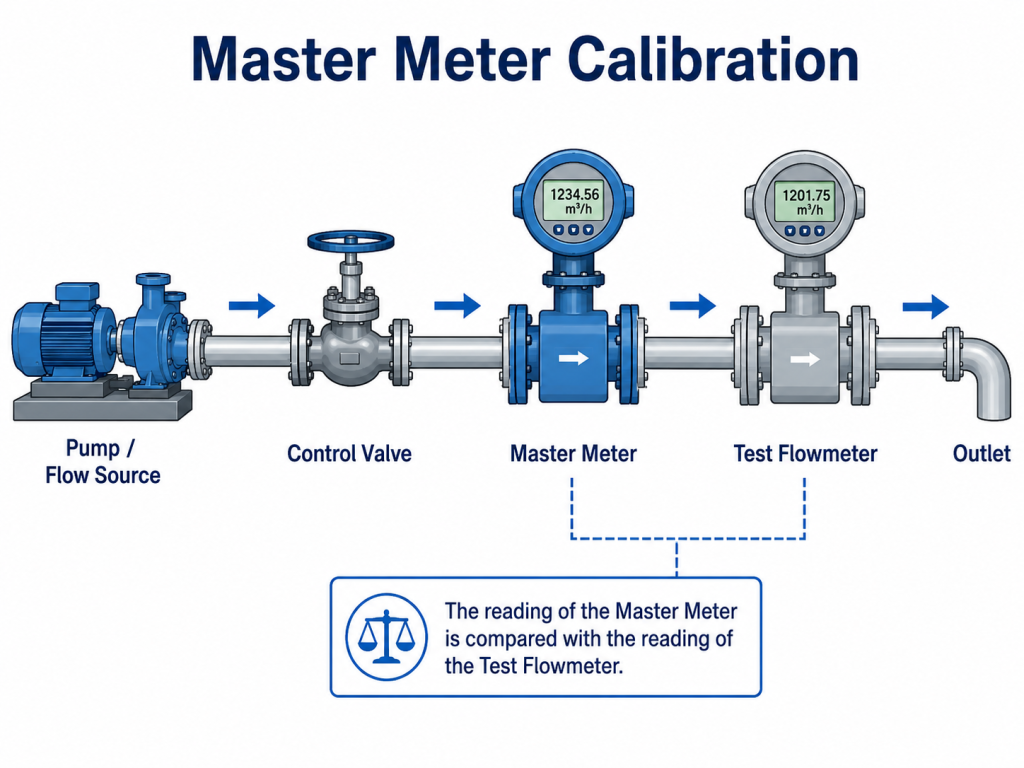
This method is commonly used for field calibration and industrial maintenance.
Gravimetric Calibration
Gravimetric calibration measures the weight of the collected fluid over a specific time. The mass is then converted into flow rate.
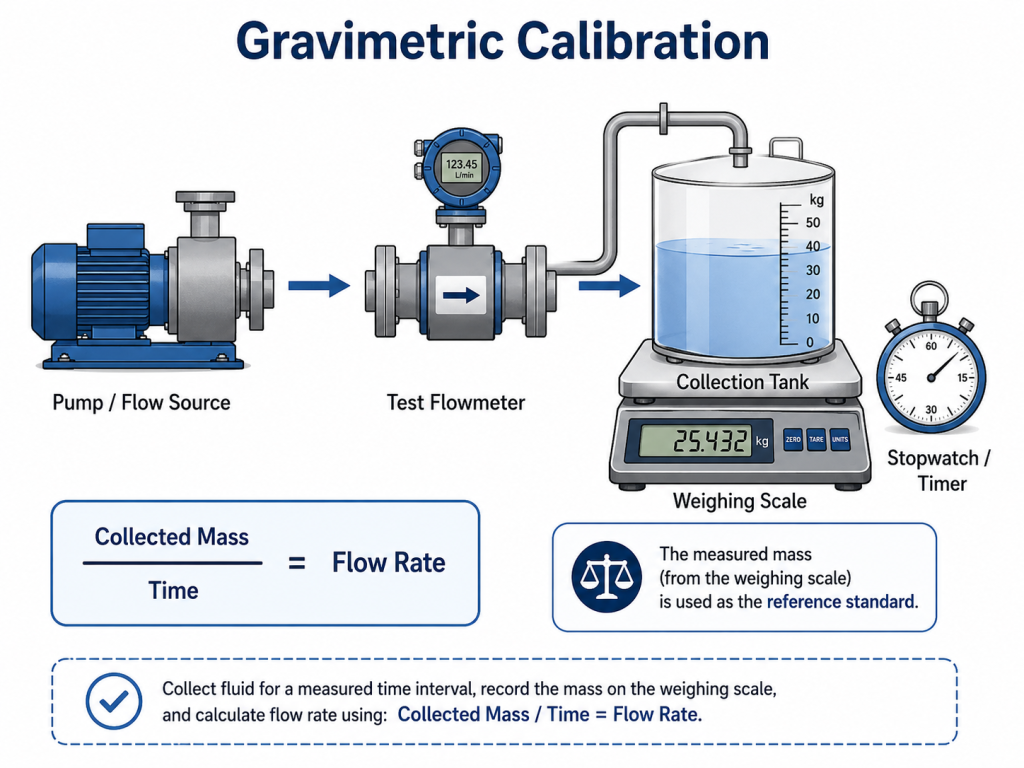
This method is highly accurate and often used in professional calibration laboratories.
Volumetric Calibration
Volumetric calibration collects fluid into a calibrated tank or container and calculates flow based on volume and time.
It is suitable for liquid flow calibration and simple verification.
Prover Calibration
A prover system is often used for high-accuracy flowmeters, especially in oil, gas, and custody transfer applications.
It provides precise and repeatable calibration results.
On-Site Verification
On-site verification checks the flowmeter performance without removing it from the pipeline. Portable ultrasonic flowmeters or process comparison methods are often used.
This method is convenient, but the accuracy may depend heavily on site conditions.
Wet Calibration
Calibrating an electromagnetic flowmeter by passing a known volume of fluid through the instrument is a common method.
Common Flowmeter Calibration Problems
Unstable Flow
If the flow is not stable, the readings will fluctuate. This may be caused by pump pulsation, valve disturbance, air bubbles, or poor pipeline design.
Incorrect Installation
Wrong flow direction, insufficient straight pipe length, partially filled pipe, or poor grounding can cause large measurement errors.
Air Bubbles in Liquid
Air bubbles can seriously affect electromagnetic, ultrasonic, and turbine flowmeters. Make sure the pipe is full and the liquid is free from excessive gas.
Scaling or Dirt on the Sensor
Deposits on electrodes, rotors, or pipe walls can reduce accuracy. Cleaning may be required before calibration.
Wrong Parameter Settings
Incorrect pipe diameter, flow unit, density, K-factor, or output range may cause wrong readings even if the sensor itself is working properly.
How Often Should a Flowmeter Be Calibrated?
The calibration frequency depends on the application, accuracy requirement, fluid condition, and working environment.
General recommendations:
| Application | Suggested Calibration Frequency |
| General water flow measurement | Every 12 months |
| Chemical dosing systems | Every 6–12 months |
| Critical process control | Every 3–6 months |
| Custody transfer or high-accuracy measurement | According to regulation or quality system |
| Harsh wastewater or corrosive liquid | More frequent inspection recommended |
If the flowmeter is used in harsh conditions, calibration should be performed more often.
Calibration of Different Types of Flowmeters
Different types of flowmeters use different measuring principles, so their calibration focus is also different. Choosing the right calibration method helps improve accuracy and reduce measurement errors in the field.
| Flowmeter Type | Common Medium | Calibration Focus | Common Calibration Method |
| Electromagnetic Flowmeter | Water, wastewater, conductive liquids | Full pipe condition, proper grounding, clean electrodes | Master meter calibration, on-site verification, laboratory calibration |
| Ultrasonic Flowmeter | Water, cooling water, large pipelines | Sensor position, pipe material, wall thickness, sound velocity parameters | Portable reference meter comparison, on-site verification |
| Turbine Flowmeter | Clean water, fuel, low-viscosity liquids | Rotor wear, bearing condition, fluid cleanliness | Master meter calibration, volumetric calibration, laboratory calibration |
| Vortex Flowmeter | Steam, gas, liquids | Straight pipe length, vibration, pressure and temperature compensation | Master meter calibration, on-site comparison, gas/steam calibration system |
| Coriolis Flowmeter | Chemicals, oil, high-accuracy liquid measurement | Zero point, density setting, installation stress | Zero calibration, gravimetric calibration, manufacturer or third-party lab calibration |
| Variable Area Flowmeter | Water, air, small flow applications | Vertical installation, float movement, reading position | Volumetric calibration, master meter calibration |
| Differential Pressure Flowmeter | Steam, gas, liquids | Orifice plate, DP transmitter, impulse lines | DP transmitter calibration, master meter comparison |
| Thermal Mass Flowmeter | Air, nitrogen, oxygen and other gases | Gas type, sensor contamination, temperature and pressure conditions | Gas flow calibration system, reference meter comparison |




Summary
Knowing how to calibrate flowmeter helps users maintain accurate flow measurement, improve process stability, and reduce operational risks. The basic calibration process includes inspection, setup, reference comparison, multi-point testing, error calculation, adjustment, and documentation.
Different flowmeters may require different calibration methods, but the goal is always the same: to ensure the flowmeter reading reflects the actual flow as accurately as possible.
Apure Flowmeter provides flow measurement instruments for water treatment, industrial process control, chemical dosing, and environmental monitoring applications. If you need help selecting, installing, or calibrating a flowmeter, please contact us for professional support.